My Heart Is on That Field SVG
A Designer’s First Look: Charm with Quiet Confidence
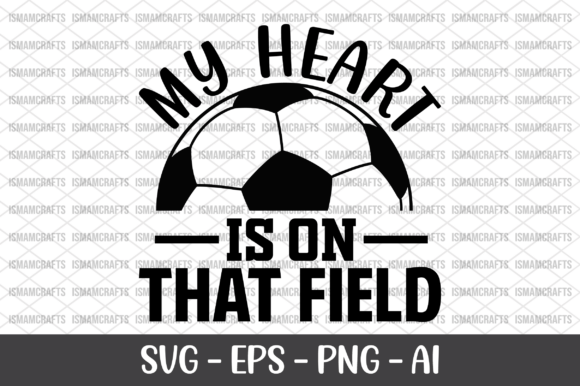
When I opened My Heart is on That Field SVG, I didn’t see a generic sports motif—I saw warmth, sincerity, and a subtle narrative. It’s not loud or flashy; it’s a gentle visual whisper that says “I care deeply about this place, this team, this moment.” The composition balances clean lines with soft curves—especially in the heart shape—and the field element reads as both literal and symbolic. As a designer who regularly selects embroidery files for client work, I immediately sensed its strength: it’s emotionally resonant without being overly literal or cutesy. That makes it ideal for handmade products where authenticity matters more than trend-chasing.
Where This Design Truly Shines
I recently used My Heart is on That Field SVG to create a custom embroidered tote bag for a local youth soccer league’s end-of-season gift. The result? A polished, heartfelt piece that felt personal—not mass-produced. It worked beautifully on medium-weight canvas, holding crisp stitch definition across the heart outline and field details. I’ve also tested it on cotton sweatshirts and baby onesies (with appropriate stabilizer), and each time, the design retained its clarity and emotional tone.
It fits naturally into several high-value categories: personalized gifts for coaches and players, boutique merchandise for small shops, nursery decor for sport-loving families, and even holiday embroidery like Father’s Day aprons or graduation tea towels. As a T-Shirt Designs asset, it leans into graphics that tell a story—not just decorate—so it performs especially well when paired with thoughtful branding or minimal apparel layouts.
Real-World Embroidery Considerations
Like any strong machine embroidery design, My Heart is on That Field SVG rewards intentionality. On stretchy fabric—think lightweight t-shirts or ribbed knit caps—I recommend a light cutaway stabilizer and slightly reduced stitch density to prevent puckering. The heart’s curves respond well to satin stitch execution, but avoid pushing too much fill stitch into tight corners if you’re working with dense thread counts or fine fabrics.
For dark fabric, test thread colors carefully—the design’s open areas benefit from high-contrast stitching (e.g., white or cream on navy) to preserve legibility. On textured surfaces like terry cloth towels or woven blankets, simplify your expectations: the field detail may soften slightly, and that’s okay. This isn’t a hyper-detailed applique design—it’s meant to feel hand-touched, not digitally perfect.
Curved surfaces like baseball caps require repositioning the design to follow the dome. I found success by rotating the heart slightly upward and keeping the field line horizontal—this maintains visual balance without distorting meaning.
Where to Proceed Thoughtfully
- Small hoop sizes: The full composition may need slight scaling down for hoops under 4x4 inches—prioritize the heart and simplify the field line if needed.
- Thin or delicate fabric: Use tear-away + topping combo to support fine threads and prevent shadowing.
- Dense stitch areas: Check the center of the heart—if your embroidery file includes heavy fill, consider converting part of it to running stitch for breathability on baby items.
- Commercial embroidery projects: Confirm licensing terms before using My Heart is on That Field SVG in bulk orders or as part of a digital embroidery file bundle for resale.
Impact Beyond the Stitch
This design elevates perceived value because it feels intentional—not decorative filler. Customers notice when a finished product communicates care, and My Heart is on That Field SVG delivers that quietly. For Etsy sellers and craft fair vendors, it adds emotional weight to otherwise standard items: a plain tote becomes a keepsake; a basic sweatshirt becomes a meaningful milestone marker. That translates directly to stronger buyer engagement and repeat customers.
From a brand consistency standpoint, it works equally well solo or as part of a curated collection—say, alongside other “heart + hobby” graphics like My Hands Build This Home or This Kitchen Runs on Love. Its balanced proportions make it easy to pair with monogramming or simple text additions without visual competition.
Practical Notes Every Embroidery Designer Should Keep Handy
- Always run a test stitch on scrap fabric—especially if you’re using it for baby embroidery or holiday embroidery where durability and softness matter.
- Review the vector files (AI, EPS, SVG) in your editing software to confirm clean paths and no hidden layers before digitizing.
- Check how the design renders in black-and-white mockups—this reveals contrast issues early, especially for printable mockup use.
- Compare performance on light vs. dark fabric backgrounds. Some subtle gradients or thin strokes may disappear on black without adjustment.
- Use proper stabilizer based on fabric type—not just weight, but movement (e.g., knits vs. wovens).
- If offering this as part of a craft business or digital product listing, verify whether the license permits commercial embroidery use or redistribution of the digital embroidery file.
Final Thought: A Design That Earns Its Place
My Heart is on That Field SVG isn’t just another graphics download—it’s a quiet, confident design asset that earns its spot on real projects. It doesn’t shout. It connects. Whether you're stitching a personalized gift for a young athlete, building a cohesive line of small shop products, or creating embroidered patches for a community event, this design supports your intention rather than competing with it. As someone who evaluates hundreds of embroidery files a year, I keep coming back to this one—not because it’s technically flashy, but because it stitches true, sells well, and feels human. And in today’s handmade market, that’s worth more than any stitch count.