Aztec SVG Bundle: Pattern Meets Purpose
As a designer who’s stitched over 300 client projects—from boutique baby onesies to Etsy best-selling tote bags—I opened the Aztec SVG Bundle, Aztec Pattern SVG expecting bold geometry and cultural resonance. What I found was more nuanced: a set of clean, scalable motifs that feel rooted in tradition but built for real-world embroidery use—not just screen printing or digital display. This isn’t a “print-and-go” graphic; it’s a design that asks thoughtful questions before you load it into your machine.
First Impressions: Rhythm, Not Repetition
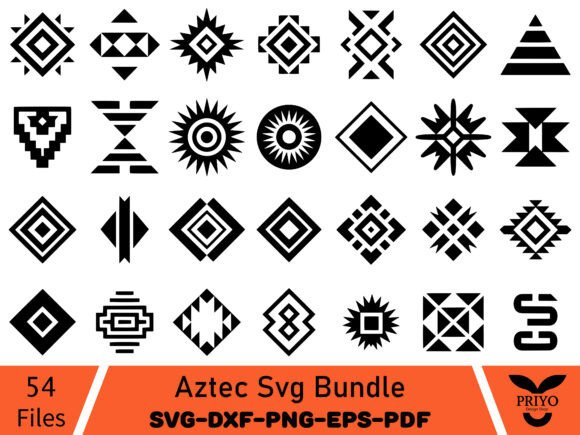
The Aztec SVG Bundle, Aztec Pattern SVG doesn’t shout. It pulses. Lines are confident but not rigid—slight variations in stroke weight suggest hand-drawn intention, not algorithmic uniformity. There’s breathing room between elements, which is rare in dense pattern bundles. That spacing matters immensely when translating to stitch: no overcrowded fill-stitch zones, no tiny islands that vanish under satin stitch tension. I immediately pictured it on a heavyweight cotton apron for a local pottery studio—structured enough for branding, warm enough for handmade appeal.
Where It Shines (and Where It Asks for Care)
In practice, this bundle excels in mid-to-large-scale applications where clarity and texture coexist. On a custom embroidered sweatshirt? Yes—especially across the back or centered on the chest. The angular motifs hold up beautifully at 4–5 inches wide, with stitch density that reads cleanly without overwhelming the fabric. On a tea towel or pillow cover? Even better. The repeating units align smoothly for border treatments or all-over layouts, and because the vectors are well-organized, resizing maintains proportion without distortion.
But—and this is critical—it’s not equally forgiving everywhere. On baby onesies or curved cap fronts, I’d simplify or isolate a single motif rather than use the full repeat. Tiny corners and interlocking triangles can blur if scaled below 2.5 inches or stitched on high-stretch knits without proper cutaway stabilizer. And while the design works on dark fabric, avoid fine white thread on black terry cloth—it’ll snag and fuzz faster than expected. Always test the Aztec SVG Bundle, Aztec Pattern SVG on scrap first, especially with textured fabrics like bouclé or linen-look blends.
Real Project Moment: A Boutique Tote Bag Launch
Last month, I used one motif from the Aztec SVG Bundle, Aztec Pattern SVG as the focal point on a limited-run canvas tote for a local herbal apothecary. We chose a deep indigo base, stitched in matte ecru cotton thread, with a subtle running-stitch outline reinforcing key angles. Customers didn’t just notice the design—they paused, traced the lines with their fingers, and asked about its meaning. That tactile response is gold for handmade product storytelling. It confirmed what the files suggest visually: this is an embroidery-first asset, not a repurposed illustration.
Design Integrity Across Use Cases
For Etsy sellers and small shop owners, the Aztec SVG Bundle, Aztec Pattern SVG supports brand consistency without feeling generic. Unlike overused tribal motifs, these patterns carry quiet confidence—ideal for modern nurseries, gender-neutral baby gifts, or minimalist holiday embroidery (think: embroidered ornaments or linen napkin sets). On personalized gifts, it adds craft value without demanding expert digitizing skills. As a machine embroidery design, it translates cleanly to applique design workflows too—just separate layers for base fabric and top-stitching.
That said, don’t assume it’s plug-and-play for every surface. Dense fill-stitch areas need careful thread color contrast checks—especially on light fabrics where stitching shadows can muddy detail. And while it’s labeled under Illustrations, treat it as Graphics built for physical output: test black-and-white mockups to verify legibility, compare how it reads on both flat and curved seams, and confirm licensing covers commercial embroidery and resale of finished products. The store notes it’s “ideal for prints, t-shirt designs, mug making, posters”—but embroidery demands different prep. Don’t skip stabilizer selection or hoop size verification.
Practical Notes Every Embroiderer Should Keep Handy
- Test first: Run a sample on scrap fabric matching your final project’s weight and stretch.
- Check thread colors: Warm neutrals (ochre, charcoal, clay) enhance authenticity; neon or pastel threads risk flattening the motif’s depth.
- Review stitch density: If your machine flags high-density zones, reduce fill percentage slightly—Aztec geometry holds up well to subtle airiness.
- Confirm hoop size: Most motifs scale cleanly from 3" to 7", but verify minimum clearances for your frame.
- Inspect small details: Zoom in on vector paths—clean joins mean cleaner stitches, especially in sharp corners.
- Mock it right: Use printable mockups against both light and dark backgrounds to assess visual weight before stitching.
- Stabilize smartly: Medium-weight tear-away for stable wovens; cutaway + topping for knits or towels.
- Verify licensing: Since this is marketed for commercial use (mugs, posters, apparel), confirm whether the license permits embroidery resale and digital redistribution.
Final Thought: Design That Earns Its Place
The Aztec SVG Bundle, Aztec Pattern SVG doesn’t try to be everything. It’s not hyper-detailed for micro-embroidery, nor is it oversimplified for mass-printing. It lives in the sweet spot where cultural pattern meets functional embroidery design—where each line has purpose, each repeat invites rhythm, and every stitch feels intentional. For craft business owners building recognizable, tactile products—and for designers choosing assets that reflect skill, not just speed—this bundle earns its place in the workflow. Just remember: respect the fabric, honor the stitch, and let the pattern speak for itself.